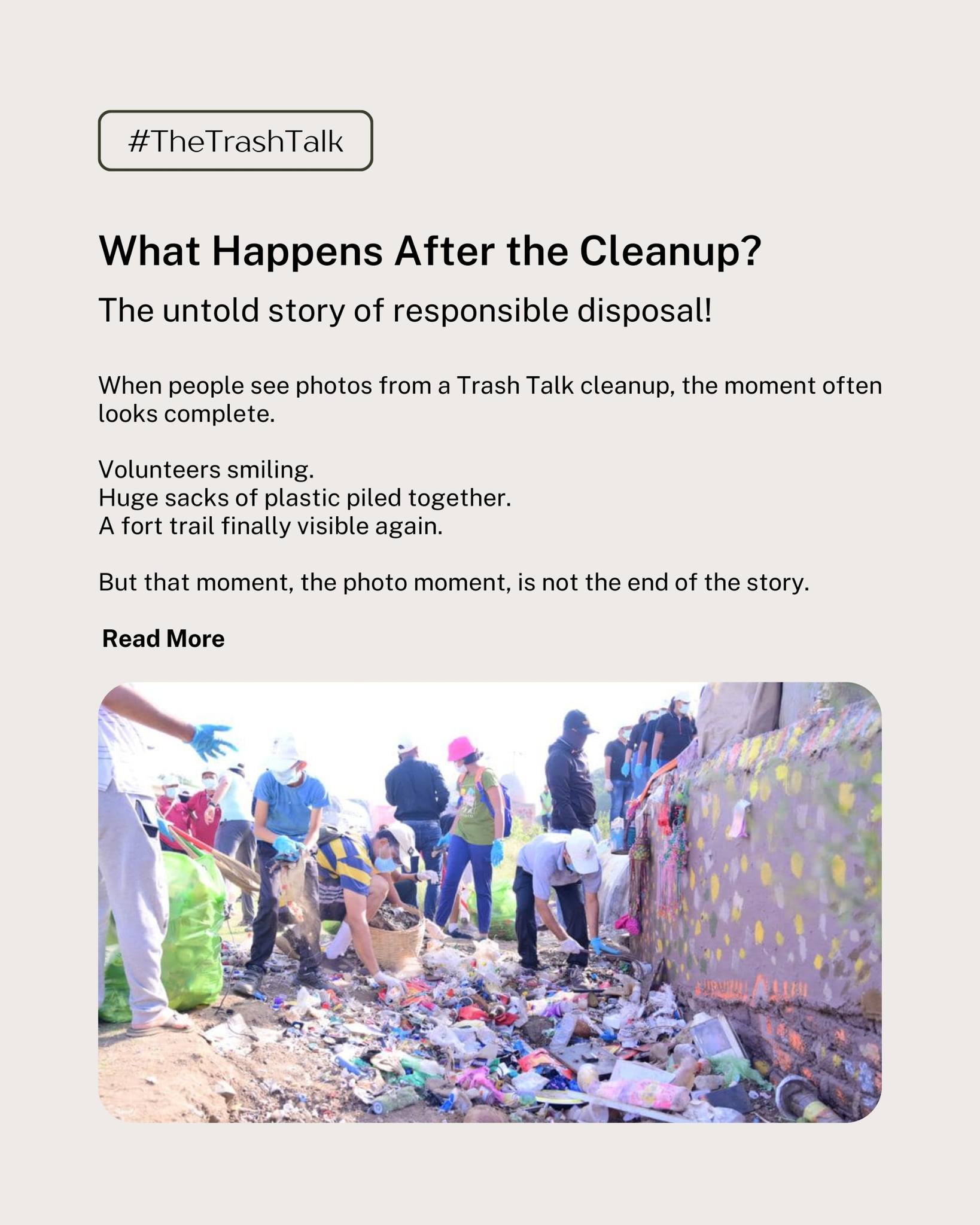
When people see photos from a Trash Talk cleanup, the moment often looks complete.
Volunteers smiling.
Huge sacks of plastic piled together.
A fort trail is finally visible again.
But that moment, the photo moment, is not the end of the story.
In fact, it’s only the middle. Because the real responsibility begins after the last wrapper is picked up.
The Question No One Asks!
*Most people ask, “How much trash did you collect?”*
*Very few ask, “What happened to it next?”*
And that question matters more than we think.
If trash collected from a fort ends up dumped somewhere else in a roadside pit, an open ground, or a riverbank, then all we’ve done is move the problem, not solve it. History may look clean for a day, but the environment pays the price later.
At The Trash Talk, cleanup is never just about removing waste from sight. It’s about making sure that waste never harms another place again. From Sacred Ground to Responsible Hands
Once the bags come down from the fort, the work becomes quieter, less visible, and far less glamorous.
Plastic needs to be sorted.
Glass needs to be separated.
Metal must be handled differently.
Contaminated waste needs careful disposal.
This is the part that rarely makes it to social media, but it’s the most important part of the mission.
Because a fort is sacred ground. And removing trash from it means taking responsibility for where that trash finally ends up.
Why is Responsible Disposal Harder Than Cleanup?
Cleaning is physical.
Disposal is thoughtful.
It requires coordination with local authorities, recyclers, and waste handlers. It requires understanding what can be recycled, what cannot, and what must be handled with care. It takes patience, follow-up, and often extra effort when systems don’t cooperate.
This is why The Trash Talk doesn’t treat cleanup as a one-day event. It treats it as a process. A process where respect doesn’t stop at the fort gate. The Real Victory Is Invisible. There is something powerful about doing work that no one applauds.
But this invisible work is what makes the visible change meaningful.
*A clean fort without responsible disposal is temporary.*
*A clean fort backed by responsible disposal is lasting.*
Teaching the Right Kind of Responsibility, for young volunteers, especially, this lesson is transformative.
This is how The Trash Talk goes beyond cleaning forts. It builds conscious citizens.
When the fort stands clean again and the volunteers head home tired but fulfilled, something important remains behind, not trash, but intention.
And that is the kind of trash talk that truly matters.