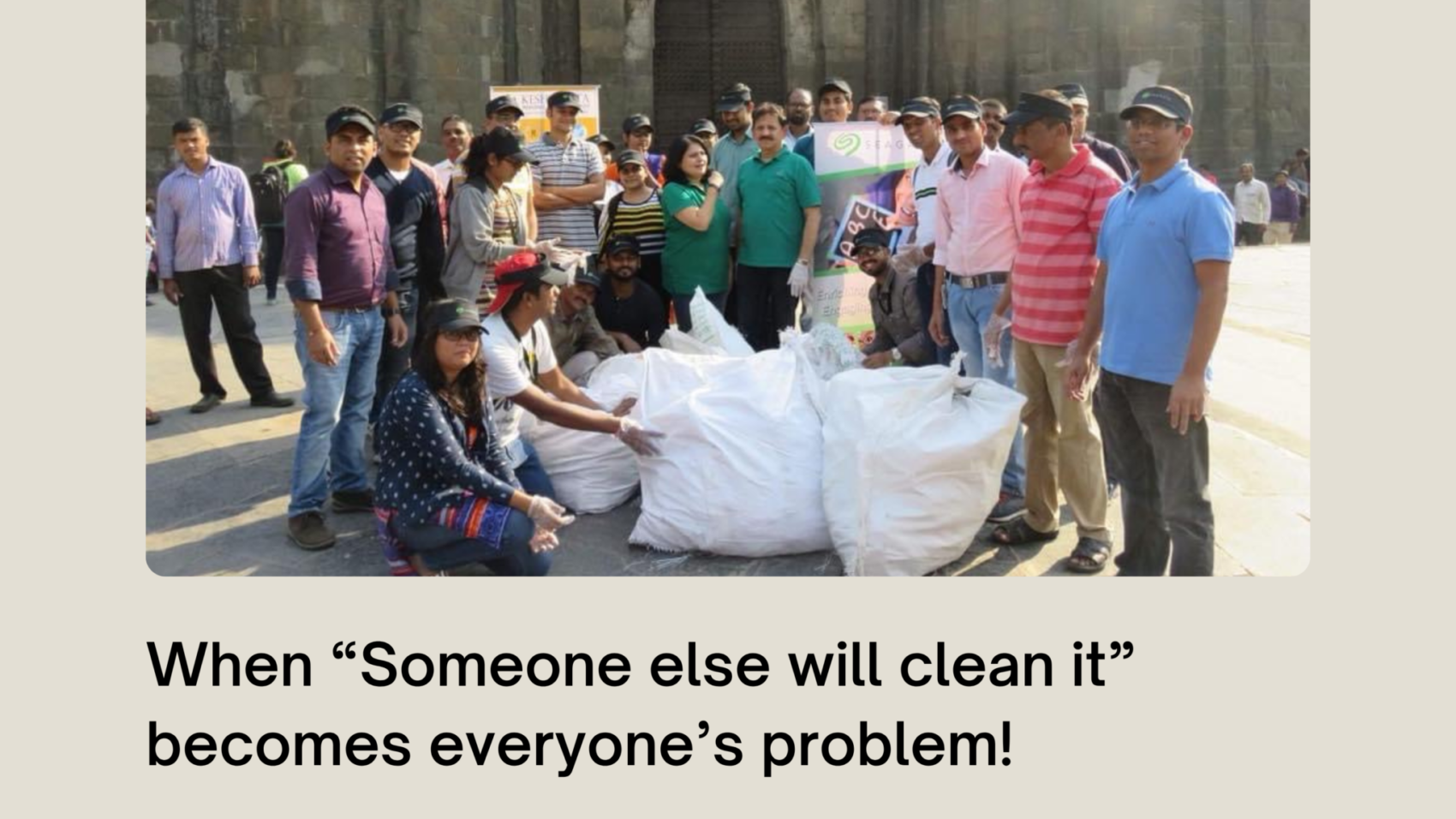
There is a sentence we have all heard, and perhaps even said without thinking too much about it: “Someone will clean it.”
A plastic bottle is left beside a fort wall. A wrapper is dropped on a trekking trail. An empty packet is pushed into a corner. It doesn’t seem like a big deal at the time. After all, it’s just one piece of waste. Surely someone will come along and take care of it.
But what happens when everyone thinks the same way?
Imagine visiting a historic fort on a busy weekend. You arrive to enjoy the view, take photographs and experience a little bit of history. Along the way, you notice a bottle lying on the trail. You walk past it because it isn’t yours.
Another visitor sees the same bottle and leaves a wrapper nearby. Someone else finishes a drink and leaves the bottle behind. Nobody came with the intention of making the fort dirty. Each person simply assumed that somebody else would deal with it. By the end of the day, those tiny decisions have become a much bigger problem.
This is the strange psychology of littering. We often underestimate the impact of our own actions because they feel insignificant. One wrapper doesn’t matter. One bottle doesn’t matter. But when hundreds of people make the same decision, those individual pieces quickly become hundreds of kilos of waste.
There is another problem too. Once a place already has garbage, people become more comfortable adding to it. A clean fort creates a natural sense of responsibility. A dirty one can create the opposite feeling: What’s one more?
This is where the idea behind The Trash Talk becomes meaningful. Kedar Patankar, along with his friends and family, chose to do something very simple when they visited historic forts. Instead of walking past the waste and waiting for someone else to clean it, they picked it up. It isn’t about being an environmental expert or organising a massive campaign. Sometimes responsibility is simply recognising a problem and deciding not to walk past it.
The same thinking can apply to all of us. We don’t have to clean an entire fort. We don’t have to change the world in one day. We can start by carrying our own waste back, avoiding single-use plastic where possible, and picking up something that doesn’t belong in the place we are visiting. Forts have survived centuries of battles, changing rulers and harsh weather. Today, one of their biggest challenges can be something much more ordinary: our indifference.
The next time you see a bottle or wrapper on a beautiful trail, perhaps don’t ask, “Who is supposed to clean this?”
Ask something simpler. “Why should it be someone else?”
Because responsible tourism doesn’t begin when somebody else takes action. It begins when we stop waiting for them to.