B- 8

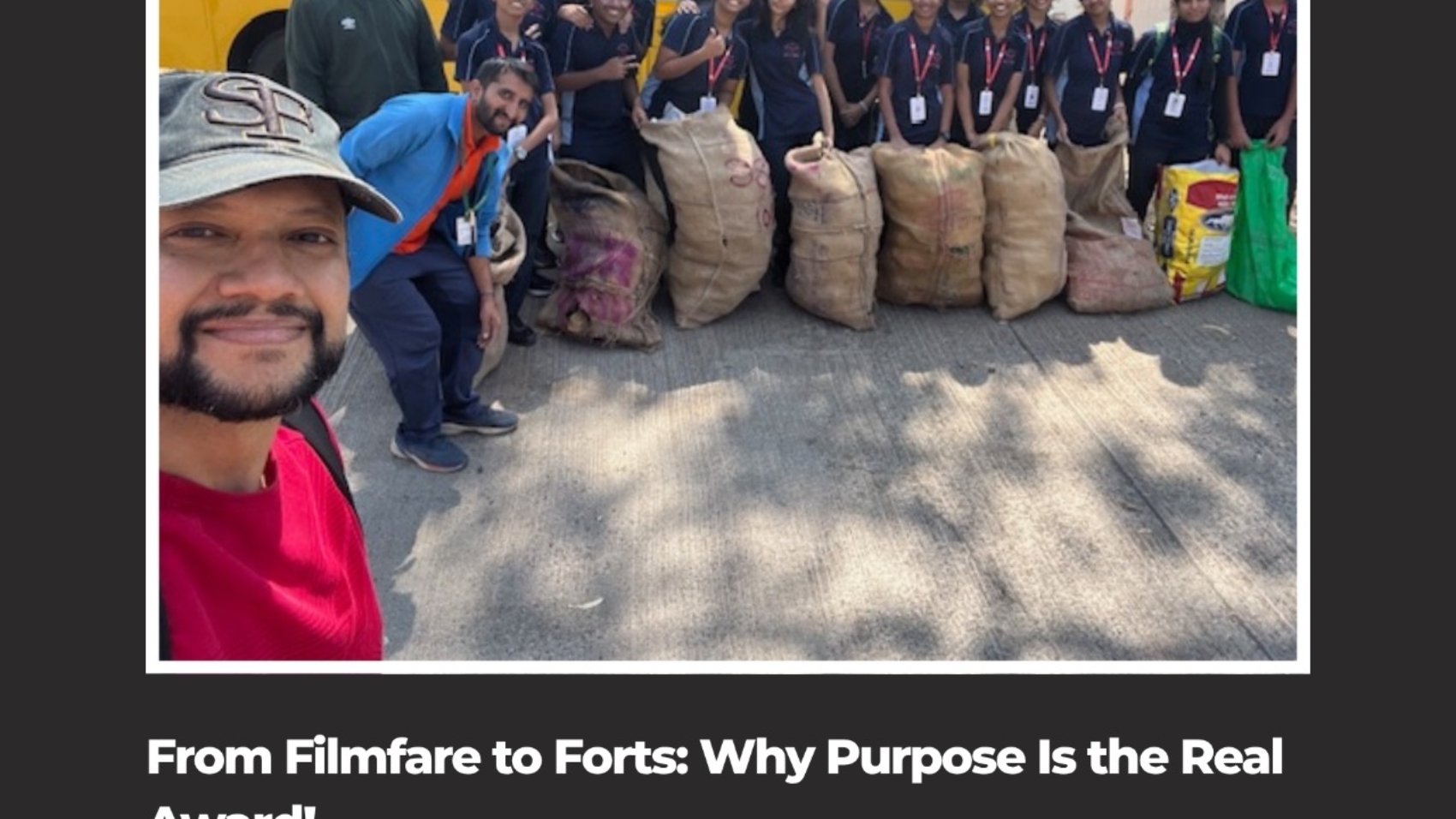
From Filmfare to Forts: Why Purpose Is the Real Award!

The journey from red carpets to real change, and why serving society is the truest form of success.

There’s a special kind of applause that echoes beyond the stage lights, it doesn’t come from a crowd, but from within.

For Kedar Patankar, an award-winning screenwriter and semiconductor executive, that applause now comes not from film festivals or red carpets, but from the rustle of wind across a clean fort wall, the laughter of volunteers, and the quiet dignity of restored heritage.

Because somewhere along his remarkable journey, from Filmfare honors to cleaning centuries-old forts, Kedar discovered something powerful : awards fade, but impact stays.

The Story Before the Shift

Kedar’s story could easily be mistaken for a movie script itself, a blend of ambition, artistry, and awakening.

A semiconductor engineer by profession, he spent two decades in the high-tech corridors of Silicon Valley and Minneapolis, designing the invisible chips that power the visible world. But his other identity, that of a writer and storyteller was equally alive.

His creative spark led him to write film scripts, short stories, and even a novella, many of which earned him recognition, including the prestigious Filmfare Award. For years, his stories entertained millions.

But somewhere amid the glamour and success, a deeper question started to form:
“What am I giving back to the world that shaped me?”

From Silver Screens to Stone Forts, The answer came not from a boardroom or a script, but from the crumbling walls of Maharashtra’s ancient forts.

These majestic structures, once symbols of pride and courage, had quietly turned into dumping grounds for plastic waste and neglect. It was heartbreaking, and Kedar couldn’t look away.

So he acted.

He founded “The Trash Talk”, a volunteer-driven initiative dedicated to cleaning and preserving Maharashtra’s heritage forts. Every month, he leads a team of passionate individuals to remove plastic, restore beauty, and spark awareness about responsible tourism.

He calls it talking trash, but what he’s really doing is teaching responsibility.

From trekking up steep fort paths with sacks of litter to partnering with colleges and local authorities, Kedar’s weekends transformed from movie meetings to mission climbs.

Redefining What Success Looks Like

In an age obsessed with recognition and rewards, Kedar’s story is a reminder that the real reward lies in purpose.

There’s no audience when he bends down to pick up trash from a fort trail. There’s no camera capturing the sweat on his forehead. Yet, these moments are richer than any award show spotlight, because they’re real.

He once said, “It doesn’t matter what your profession is, everyone can do everything. You don’t have to quit your career to serve society; you just need to care enough to act.”

That belief has turned The Trash Talk into more than a movement — it’s become a mindset.

Purpose: The Award That Never Gathers Dust
Awards sit on shelves; purpose lives in hearts.

The forts Kedar and his team clean have stood through centuries of battles, now they’re being saved by a different kind of warrior: one armed with a garbage bag, not a sword.

And if you ask Kedar Patankar what his greatest achievement is, he’ll probably smile and say,
“It’s not the Filmfare on my shelf… it’s the clean fort beneath my feet.”

Because in the end, the real award is knowing you made a difference.
B-7

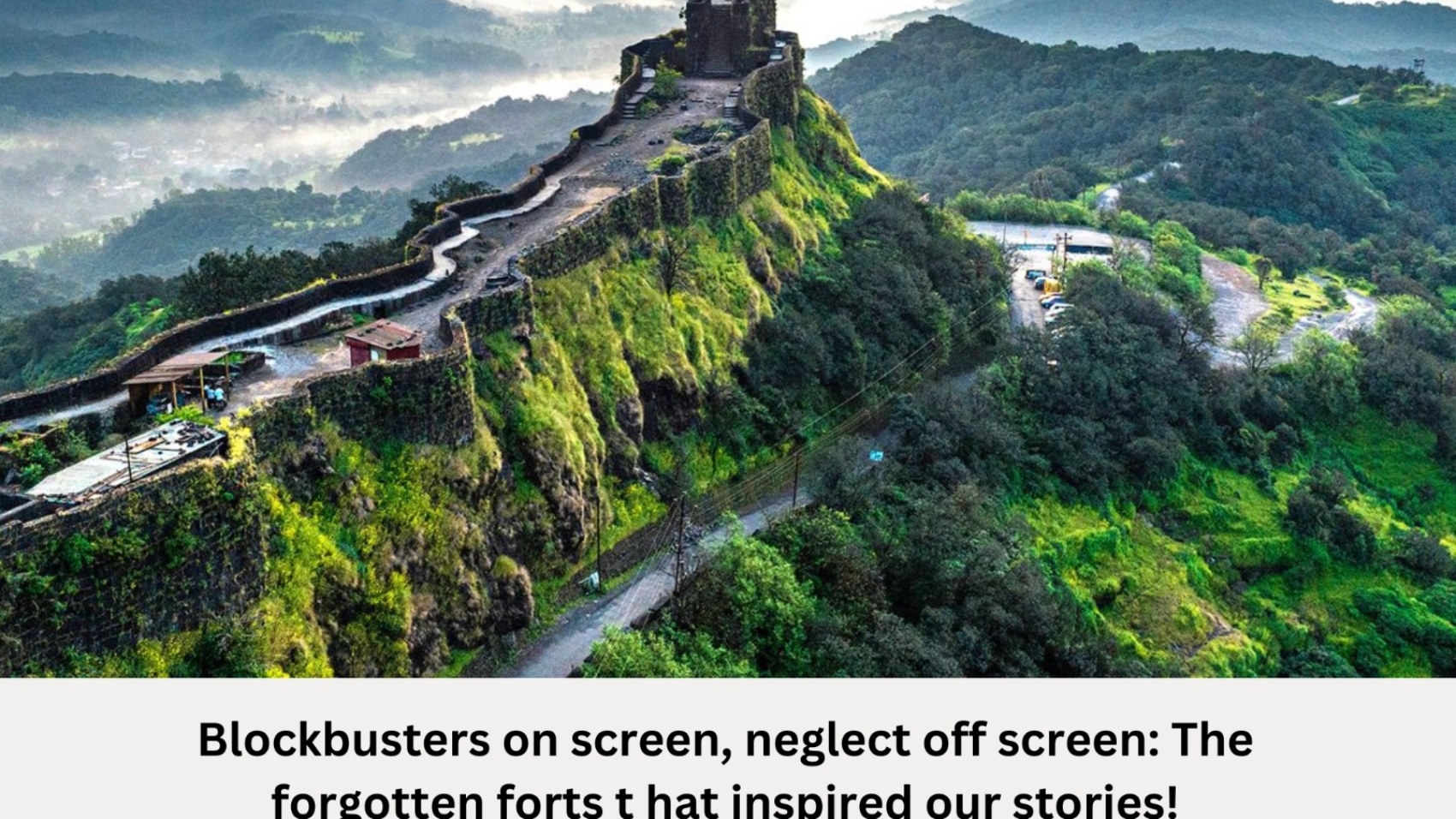
Blockbusters on screen, neglect off screen: The forgotten forts that inspired our stories!

How India’s most iconic film locations are celebrated in theatres but abandoned in reality — and why it’s time we gave back to the heritage that made our stories possible.

When the curtains rise and the screen fills with the sweeping grandeur of a Maratha fort or the timeless silhouette of an ancient wall against the sky, we’re transported into history. We watch battles unfold, kings rise and fall, and timeless stories of valor and pride, all against the breathtaking backdrop of our heritage.

But when the lights come back on, and we step out of the theatre, something strange happens, we leave that admiration behind.

Because the same forts that stir our hearts on screen, the same majestic locations that make our films larger than life, often stand neglected, littered, and forgotten in the real world.

The Real Sets of Indian Cinema

From Sinhagad and Raigad in Maharashtra to Amber Fort in Rajasthan, India’s forts have played silent roles in countless films. They’ve been the cinematic stand-ins for kingdoms, battlefields, and legends. Directors spend crores recreating their magic in studios, yet the original masterpieces continue to crumble under the weight of time, plastic, and apathy.

The irony is painful, movies inspired by history go on to earn hundreds of crores, while the places that made that history fight to stay alive.
We glorify our past on screen, but rarely protect it off-screen.

The Forgotten Guardians

These forts are not just walls of stone. They are chapters of our identity, built with vision, courage, and purpose.
They’ve survived wars, weather, and centuries of change. But what they can’t survive is neglect.

If you visit one today, you might see a wrapper caught in the wind where a warrior once stood guard. Or hear the echo of loud music where silence once spoke of discipline and dignity.

Our forts don’t need our pity, they need our participation.

From Red Carpets to Real Change

This is where initiatives like The Trash Talk step in, turning admiration into action.

Kedar, a semiconductor executive and Filmfare-winning screenwriter, traded the glamour of movie sets for real-world missions, leading volunteers to clean Maharashtra’s historic forts every month.

He calls it “Our Treasure, Our Trash.”

It’s not just a cleanup, it’s a movement. One that reminds us that responsible tourism and heritage conservation are not government jobs; they’re personal duties.

Every plastic bottle lifted, every fort path cleared, is an act of gratitude — a thank-you to the places that inspired generations of stories.

When we visit a fort, we often take pictures, post them online, and move on. But what if we left something behind other than footprints, what if we left it cleaner, safer, and more respected?

Imagine if even a fraction of the revenue films made from historical stories went back into maintaining these sites.
Imagine schools adopting forts as “living classrooms.”
Imagine tourists being trained in heritage etiquette, not just sightseeing.

That’s how we rewrite the narrative, from exploitation to preservation.

We Owe Our Forts More Than Selfies

Our forts have given us stories of courage, sacrifice, and pride.
They’ve inspired filmmakers, historians, and dreamers alike.

Now, it’s time we gave them a story worth telling again.
Not one of neglect, but of revival.

Because a country that forgets its heritage forgets its roots.
And a people who protect their past, secure their future.

So, the next time you see a grand fort on screen, let that admiration follow you into the real world. Visit it. Respect it. Protect it.

Because history already made them heroes, now it’s our turn to be theirs.

B-6

What Happens After the Cleanup? The Untold Story of Responsible Disposal..

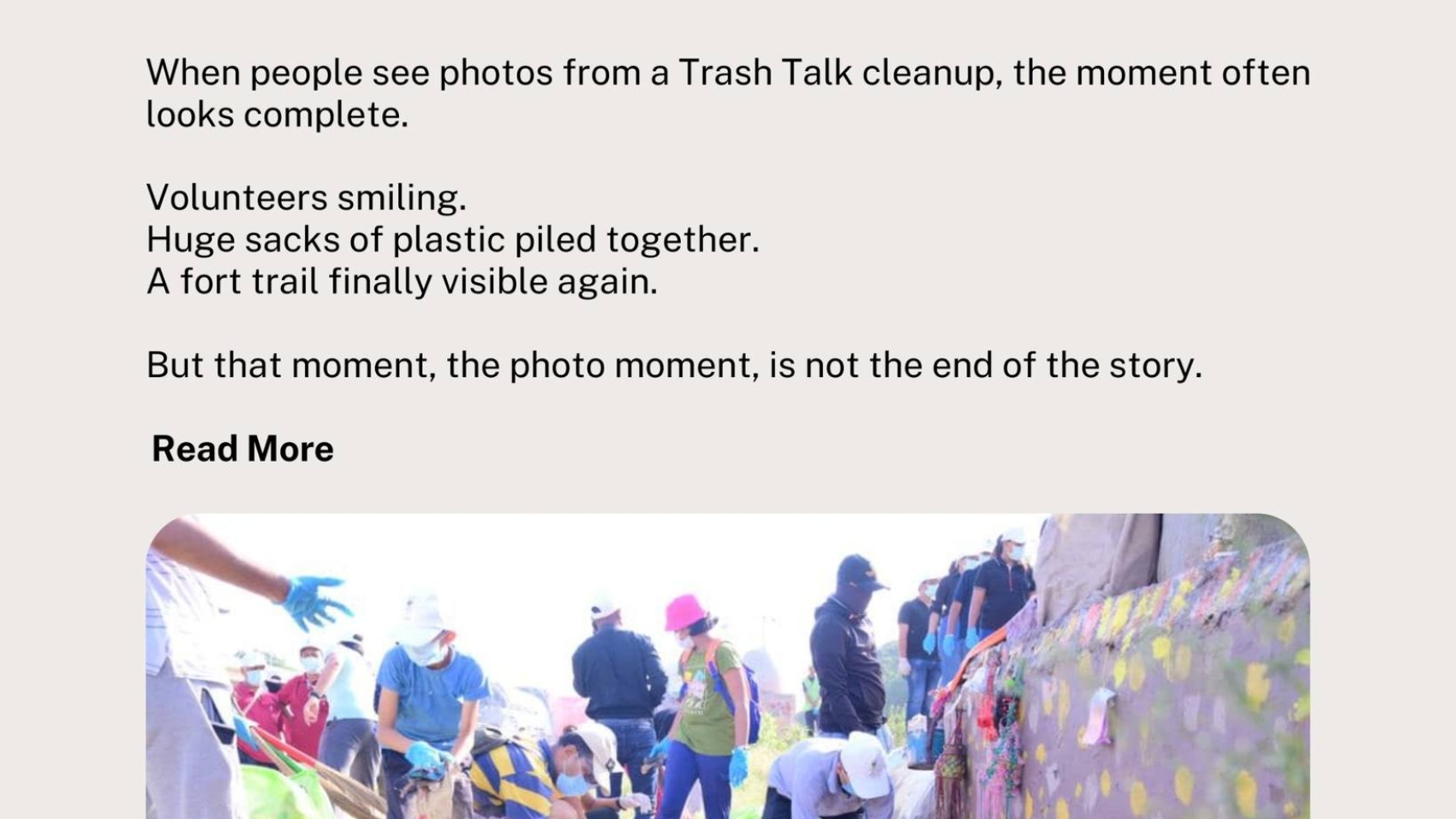
When people see photos from a Trash Talk cleanup, the moment often looks complete.

Volunteers smiling.
Huge sacks of plastic piled together.
A fort trail is finally visible again.

But that moment, the photo moment, is not the end of the story.

In fact, it’s only the middle. Because the real responsibility begins after the last wrapper is picked up.

The Question No One Asks!

*Most people ask, “How much trash did you collect?”*
*Very few ask, “What happened to it next?”*

And that question matters more than we think.

If trash collected from a fort ends up dumped somewhere else in a roadside pit, an open ground, or a riverbank, then all we’ve done is move the problem, not solve it. History may look clean for a day, but the environment pays the price later.

At The Trash Talk, cleanup is never just about removing waste from sight. It’s about making sure that waste never harms another place again. From Sacred Ground to Responsible Hands

Once the bags come down from the fort, the work becomes quieter, less visible, and far less glamorous.

Plastic needs to be sorted.
Glass needs to be separated.
Metal must be handled differently.
Contaminated waste needs careful disposal.

This is the part that rarely makes it to social media, but it’s the most important part of the mission.
Because a fort is sacred ground. And removing trash from it means taking responsibility for where that trash finally ends up.

Why is Responsible Disposal Harder Than Cleanup?

Cleaning is physical.
Disposal is thoughtful.

It requires coordination with local authorities, recyclers, and waste handlers. It requires understanding what can be recycled, what cannot, and what must be handled with care. It takes patience, follow-up, and often extra effort when systems don’t cooperate.

This is why The Trash Talk doesn’t treat cleanup as a one-day event. It treats it as a process. A process where respect doesn’t stop at the fort gate. The Real Victory Is Invisible. There is something powerful about doing work that no one applauds.

But this invisible work is what makes the visible change meaningful.

*A clean fort without responsible disposal is temporary.*
*A clean fort backed by responsible disposal is lasting.*

Teaching the Right Kind of Responsibility, for young volunteers, especially, this lesson is transformative.

This is how The Trash Talk goes beyond cleaning forts. It builds conscious citizens.

When the fort stands clean again and the volunteers head home tired but fulfilled, something important remains behind, not trash, but intention.

And that is the kind of trash talk that truly matters.

Post 2

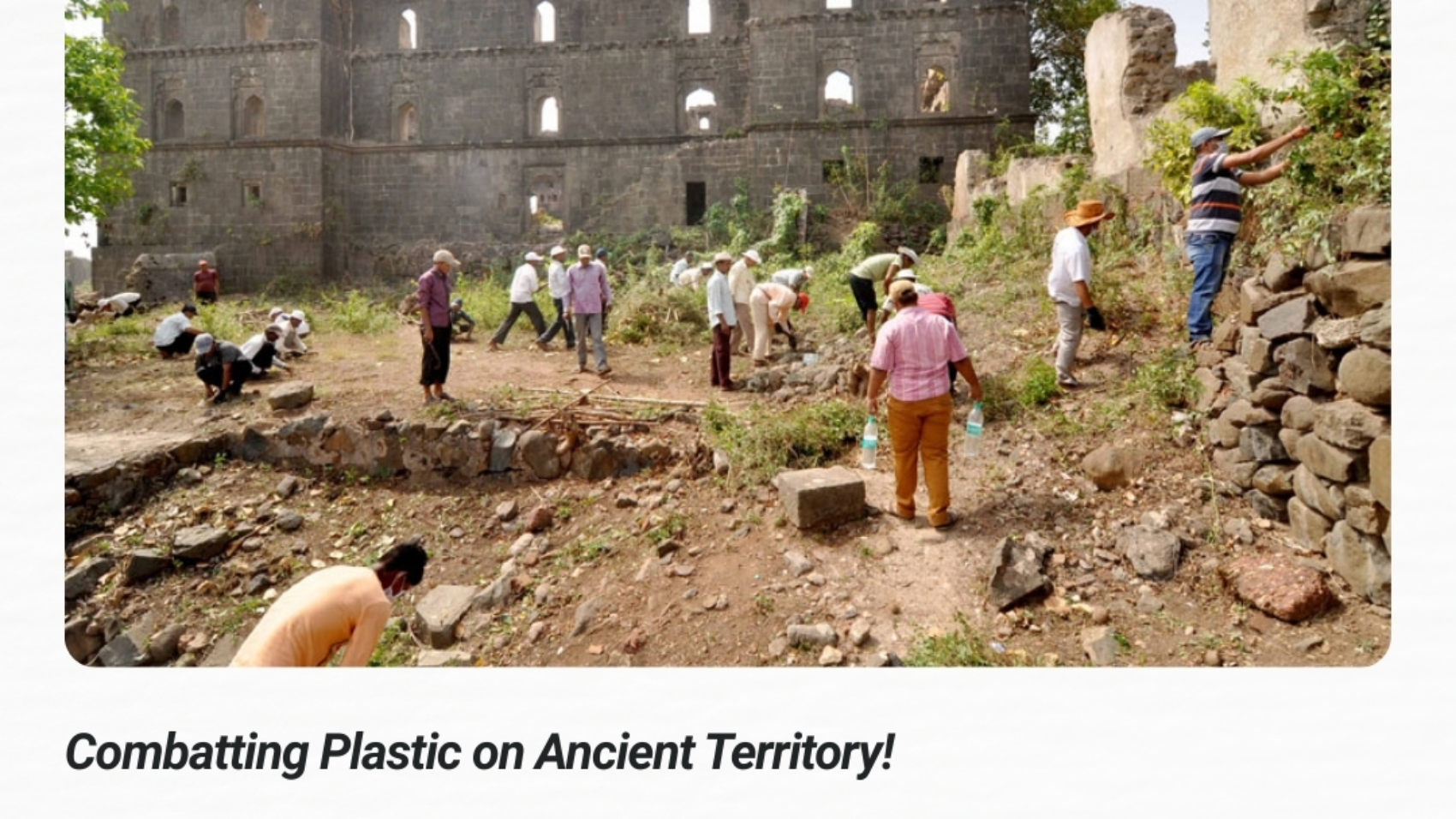
Battles of the Past, Battles of Today: Combatting Plastic on Ancient Territory!

Generations ago, Maharashtra’s forts were an emblem of valor, strength, and triumph. Stone walls pierced the heavens against invading forces, watchtowers pierced the skies, and each step on the curved roads resounded with warriors’ footsteps.

Today, those same fortifications are threatened by a very different foe — one that doesn’t storm with swords or cannons, but creeps in on our neglect. Plastic bottles hidden behind rocks. Chip packets blowing in the breeze. Disposable plates stuck between fissures in ancient rock.

It’s an invasion… but a silent one.

The New Battlefields
If history books wrote today’s tale, it would sound like this:

“Forts once fell to invading hordes. Now, they fall to plastic and indifference.”

The foe no longer breaches the gates — it’s brought up in packs by the same visitors who come to tour these locations. A thoughtless traveler leaves a wrapper. A crowd vacuums up bottles after a picnic. Wind and rain disperse trash, smothering vegetation, contaminating soil, and discoloring legacy that has stood for centuries.

Step into “The Trash Talk”
Here’s where The Trash Talk, started by Kedar Patankar, enters the fray.

Kedar’s tale is a surprising one — he’s no historian, no warrior, but a man who came to understand that heritage requires guardians even now. With The Trash Talk, he’s creating an army of volunteers and nature enthusiasts who undertake the trek to forts with one aim in mind: cleaning up, restoring, and guarding.

It’s cleaning up heritage for a purpose. From gathering plastic trash to disposing of it in environmentally friendly manners, each clean-up drive is a token of respect towards the past and accountability towards the future.

Why It Matters
It’s simple to say — “It’s just one wrapper” — but forts didn’t get built overnight, and they’re not getting destroyed in one either. The destruction is gradual, but it’s real. Plastic lasts for centuries to break down, and in the meantime, it leaches poisons into the very ground these forts are constructed upon.

Consider this — these walls endured monsoons, sieges, and centuries of transformation… only to be compromised by our trash? That’s not the legacy we desire.

From Warriors to Volunteers
At one time, warriors fought up these slopes with swords in their hands. Now, volunteers tote bags and gloves. It’s not glamorous, but it’s a battle we must fight.

The foe might change, but the bravery is the same — because defending what you care about will always be work.

Your Role in the Story
You don’t need to participate in a group clean-up in order to be part of the solution. The simplest way to assist is easy: don’t contribute to the issue. Bring your trash down, refuse single-use plastic when you travel, and say something if you witness littering.

Our forts battled for us in the past. Now it is our turn to battle for them.

B - 5

The Multiple-box Life: How to Fit Multiple Passions Into a Single Lifetime!

We’ve all heard the advice: “Pick one thing and stick to it.” It sounds noble, disciplined, even logical. But here’s the truth: life is far too big, rich, and unpredictable to fit neatly into just one box.

Some are born specialists. They drill one well, descend deep, and hit water. Some of us, however? We’re built differently. We desire to drill many wells not because we’re flighty, but because we love the look of varied landscapes.

I refer to this as the multiple-boxes Life, a style of living in which your passions, projects, and pursuits each have their own compartment.

Life Isn’t One Big Box
Envision your life as a super-sized moving truck. If you simply throw all the items into one super-sized box, it ends up being messy, knotted, and chaotic. But if you use smaller, nicely labeled boxes, you have a clue about where things go and you can open whatever one that spurs you at the moment.

One box could be your professional life.
Another could be your passion for the planet.
Another may be an activity such as painting, photography, hiking, or writing.
And yes, occasionally you’ll place new boxes on top of older ones, or replace them altogether.

This way, you don’t need to leave behind a passion for exploring another you just put it in its box, safe and available, until you’re ready to open it up again.

The Myth of “One True Calling”
We idealize the notion of discovering that one thing we’re supposed to do. But here’s the truth your “one thing” at age 25 may not be your “one thing” at age 45. Passions change, priorities shift, and opportunities surprise you.

When you live the Small-Box Life, you’re free to change without apology. You’re not betraying your past dreams, you’re just adding new ones to the list.

Serving Your Future Self
Each box you create today is a present for the person you’ll be tomorrow.

Pursue that book thought, even though you are not yet an author. Learn that digital marketing course, even though your current job is in engineering. Learn pottery, even if you’ve never handled clay in your life.

Because in five, ten, or twenty years from now, your future self may reach for that skill, that recollection, that experience and find it waiting there.

But Won’t It Be Too Much?
This isn’t a matter of doing everything at once.
It’s a matter of doing sufficient of each to keep the spark going. It’s about rotation, not overload.

Some seasons, one box will claim more of your time.
Other seasons, another box will be in the spotlight.
The skill is knowing when to make the change, and never allowing a box to become too stale.

Your Boxes Tell Your Story
Ultimately, your life will not be about the size of your primary box it will be about the depth of the set.

And when someone asks you “What do you do?” you can smile and respond:
“I live the multiple-boxes Life. I’m building many stories at once.”

Don’t minimize your life to fit a single label, single role, or single predictable path. You get to be a mosaic, not merely one tile. And if you show up for all your boxes, one day your future self will thank you for the guts to live richly, broadly, and unapologetically.

Final 11

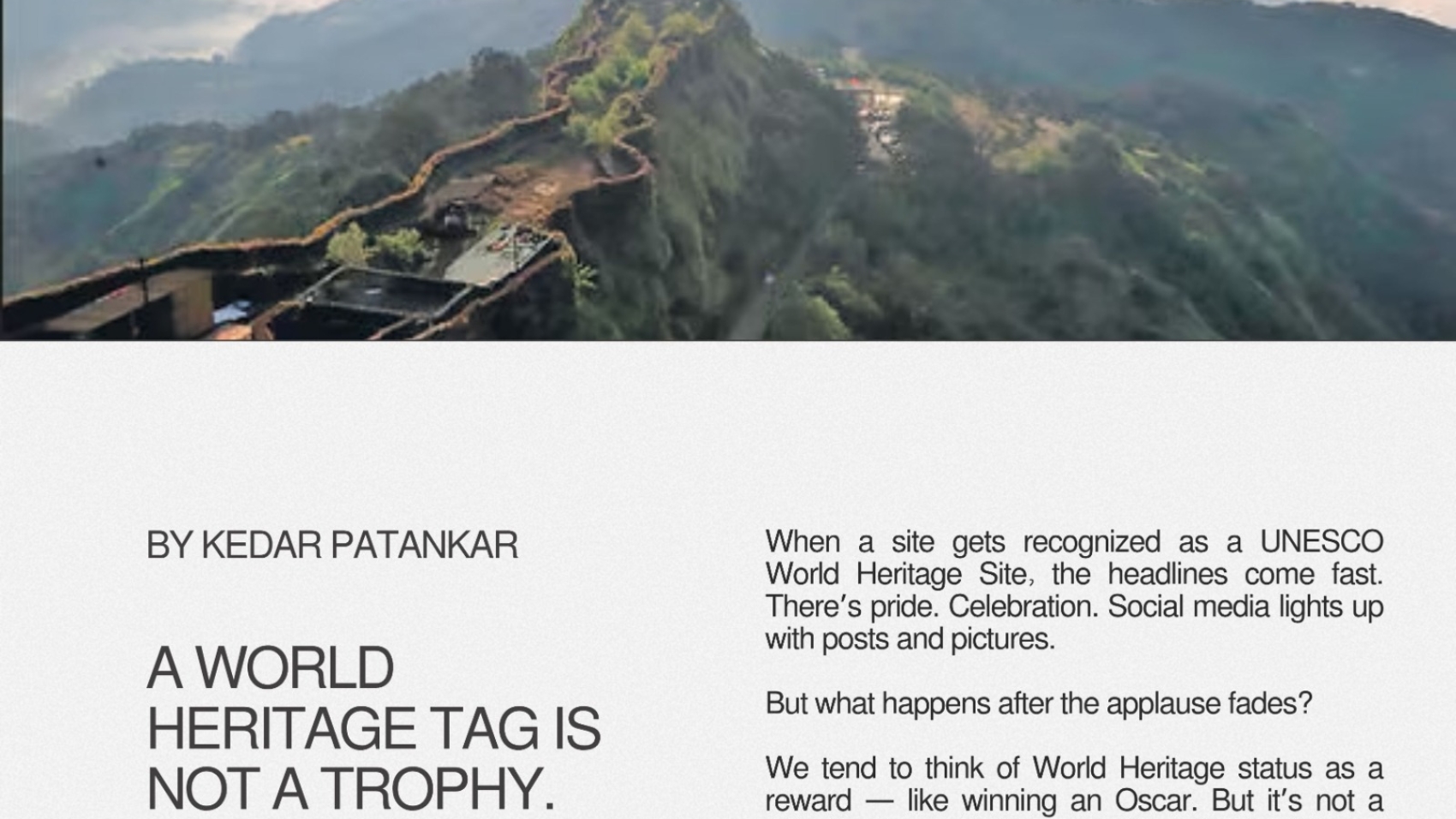
A World Heritage tag is not a trophy. It’s a Reminder!

When a site is inscribed as a UNESCO World Heritage Site, there’s a sense of national pride.
It’s a moment of celebration. A collective nod that says,
“Yes, this place matters to humanity.”

But that plaque is more than recognition. It’s not a finish line.
It’s a starting point.

Because with global recognition comes a deeper, shared responsibility.

Recognition Is Powerful — But It Can’t Do the Work Alone
Let’s be honest — the footfall was always there.
People have loved these sites for generations. The forts, the temples, the forests — they’ve always drawn crowds, trekkers, and weekend wanderers.

But now, with World Heritage status, comes the opportunity — and obligation — for governments at all levels to step up their protection efforts.
More resources. More regulations. More visibility.

However, none of that will mean anything…
if the people don’t care.

A UNESCO tag is global recognition — but preservation begins at home.
It should never have taken international certification for us to value our own legacy.
Still, now that the world is watching — let’s rise to the occasion.

The Truth on the Ground
At The Trash Talk, we’ve been working for years to clean up forts across Maharashtra — majestic structures that carry the stories of our past.
But what we often find is plastic. Cigarette stubs. Beer cans. Loud music. Graffiti.

The care is missing. Not because people don’t love these places — but because we’ve forgotten how to love them right. Love isn’t just selfies and stories. It’s silence, respect, and responsibility.

A fort is not a picnic spot. It’s not a DJ zone.
It’s a page from our history — and it deserves to be read with reverence, not stomped on with apathy.

What Heritage Really Means
Being listed as a World Heritage Site doesn’t mean the work is done.
It means the spotlight is on — and the pressure is on us.

To preserve.
To protect.
To educate.
To act.

And most importantly — to redefine what it means to be a “visitor.”
Not a consumer. Not a tourist. A caretaker.

It Belongs to the World. But It Starts With Us.
This recognition is a gift — and a challenge.
Can we show the world that we deserve this honor?

Let’s not wait for more tags, more certificates, or more headlines to start caring. Let’s remember: Heritage doesn’t protect itself. We do.

Every wrapper you don’t drop.
Every wall you don’t deface.
Every step you take with respect — that’s where conservation begins.

So next time you walk through a fort or heritage site, pause.
Not just for the photo — but for the feeling.
Because now, the world sees it as special.
But we should have always known.

Let’s rise to the responsibility. Let’s protect our past — so that future generations can walk through it with pride.

Blog 1

The Dark Side of the Sparkle: How Firefly Tourism is Silently Killing What We Came to See!

Because sometimes, the most beautiful experiences come at a heart-breaking cost.
#ResponsibleTourism

Every year, as the monsoon teases the first raindrops and forests in India begin to hum with life, something magical happens: fireflies begin their breath-taking dance of light.

Tiny beacons flashing in the night, these glowing creatures attract thousands of tourists. Social media floods with photos of glittering trees and enchanted trails. The “firefly festival” has become a must-do on every travel influencer’s list.

But here’s the part no one posts: the very act of visiting these fireflies in large numbers is killing them.

Too Much Love Can Kill
Fireflies are incredibly sensitive to light pollution, noise, and physical disturbances. They thrive in calm, dark, undisturbed environments — which is the exact opposite of what a crowd of excited tourists, honking cars, and phone flashes bring with them.

When 500 people arrive at a forest with torchlights, diesel generators, campfires, and DSLR cameras, it’s not a festival for the fireflies — it’s an invasion. Mating cycles are disrupted. Habitat gets trampled. And with each passing year, the number of fireflies is dwindling — quietly, tragically.

You may see them today, but what if there are none left tomorrow?

The Rubber Death: The Killers You Don’t Notice
It’s not just light and noise. The most unseen villain is your car tire. Many fireflies rest on or near trails, especially in the early evening. Without knowing, tires crush dozens, sometimes hundreds of them on a single night. The very road you take to “see” them becomes their graveyard.

Think about that next time you drive into their world with music blasting and headlights full beam.

What Can We Do Instead?
Responsible tourism isn’t about staying home — it’s about showing up differently. Here’s how you can experience the fireflies without becoming part of the problem:

Visit in small groups. Avoid weekends and festival crowds.

Never use flashlights or phone flashes — your eyes will adjust, and the glow will be even more magical.

Stay on marked trails. Don’t wander into the undergrowth.

Avoid loud music and talking. Let the forest stay a forest.

Choose eco-conscious operators who understand conservation and put nature first.

And sometimes? Don’t go at all. Some beauty is meant to be left undisturbed.

Let the Light Live On
We don’t need to “consume” every magical moment. We need to protect it.

Fireflies aren’t a festival. They’re a fragile reminder of how breath-taking and delicate nature can be. Let’s not turn awe into extinction. Let’s make responsible tourism more than just a hashtag. Let’s make it our promise.

Because if we truly love nature, we must learn to walk lightly, speak softly, and — when needed — step back.

Post 2

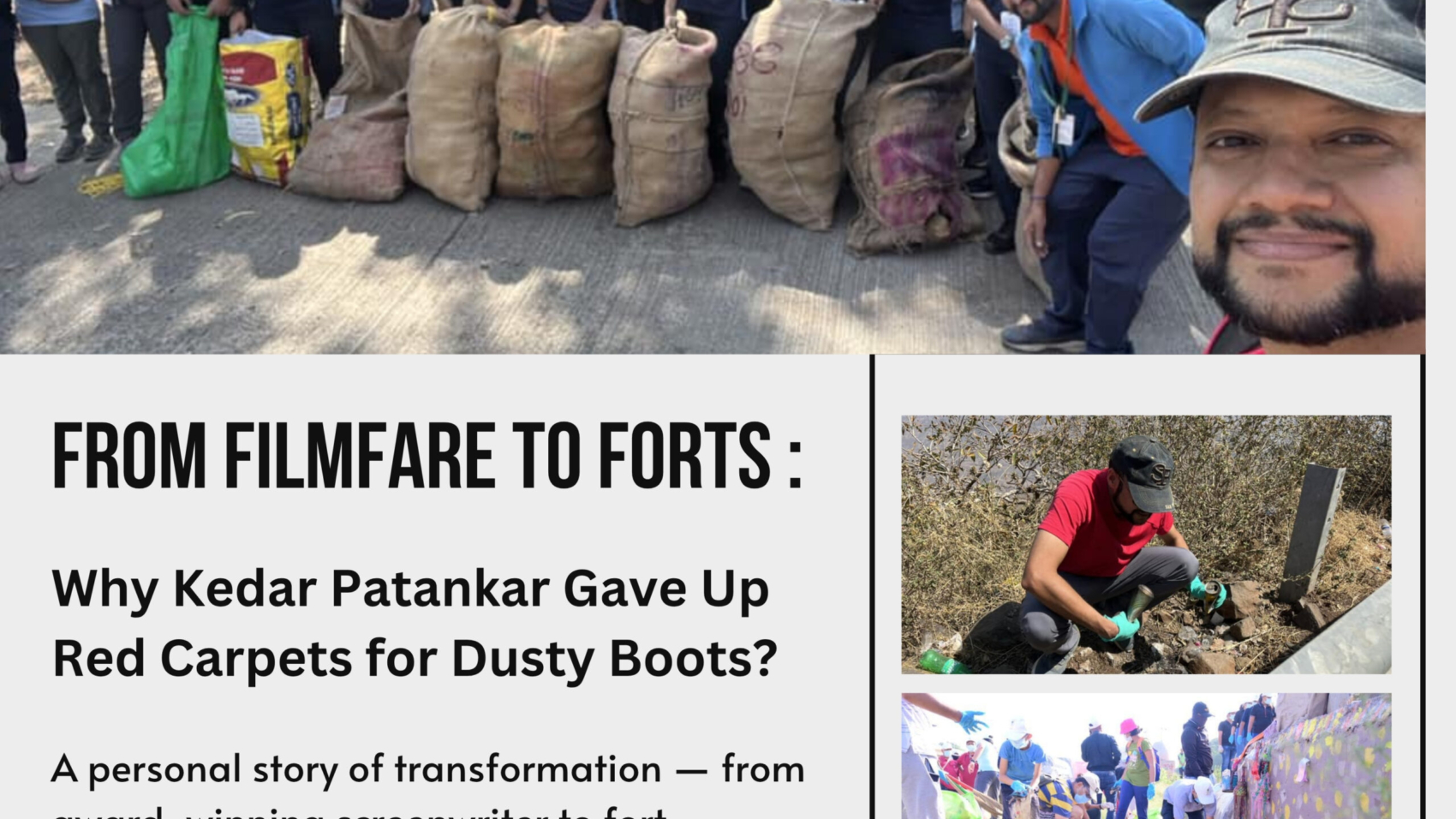
From Filmfare to Forts: Why Kedar Patankar Gave Up Red Carpets for Dusty Boots!

From Filmfare to Forts: Why Kedar Patankar Gave Up Red Carpets for Dusty Boots
A personal story of transformation — from award-winning screenwriter to fort-cleaning environmentalist. Proof that passion can have many paths.

If you spotted Kedar Patankar walking through the dusty trails of a hill fort, gloves on, hauling a sack of discarded plastic bottles, you probably wouldn’t guess he’s a Filmfare-winning screenwriter. You wouldn’t know that he spent two decades in the U.S. working at the cutting edge of semiconductor technology. Or that he’s shared the stage as a TEDx speaker, and written scripts for films that made audiences cry, cheer, and think.

Because here, at the crumbling steps of a 400-year-old Maratha fort, there are no red carpets. Only wrappers.

So what made a Silicon Valley executive and a successful screenwriter trade premieres and panel discussions for cleanup drives and sunburns? The answer is simple: purpose.

A Shift from Silver Screens to Stone Walls
Kedar’s creative journey was already an unusual one — an engineer by education and training, he built a parallel life as a writer, weaving together narratives that won awards and resonated with audiences. But even at the height of success, something tugged at him: the stark contrast between the stories we celebrate and the places we forget.

On a personal trip to one of Maharashtra’s iconic forts, he was struck — not by the majesty of history, but by the ugliness of the present. Plastic bottles, chips packets, broken glass — remnants of apathy scattered across centuries of pride.

And that’s when The Trash Talk was born.

The Trash Talk: Cleaning Up More Than Just Trash
The Trash Talk is a passion-driven, no-profit initiative by Kedar Patankar, dedicated to making Maharashtra’s historic forts litter-free. But this is no weekend hobby. It’s a full-scale movement focused on heritage clean-up, plastic waste collection, and — most importantly — its environmentally responsible disposal.

Every month, Kedar and his growing team of volunteers (students, professionals, even families) trek to ancient sites armed with gloves, bags, and a fierce love for history. They don’t just clean; they reclaim — piece by piece, fort by fort, memory by memory.

Beyond Trash: A Deeper Message
What makes The Trash Talk more than a clean-up campaign is the philosophy it carries: everyone can do everything. That’s Kedar’s mantra. You don’t have to choose between being a techie or a creative, a professional or an activist. You can be many things — and be meaningful in all of them.

In the age of hashtags and hustles, Kedar’s story is a rare reminder that impact doesn’t need applause. Sometimes, it just needs a pair of willing hands, a garbage bag, and the patience to walk the extra mile — uphill, barefoot if needed.

The Legacy He’s Building — One Fort at a Time
While his scripts once lit up cinema screens, today his legacy is being written in quieter ways: in the smiles of volunteers after a cleanup, in the pride of a child learning about Shivaji Maharaj’s history without stepping over trash, and in the land itself — a little cleaner, a little more loved.

From Filmfare to forts, Kedar Patankar has shown that life doesn’t have to follow a linear script. You can write your own — plot twists, dust, and all.

B - 2

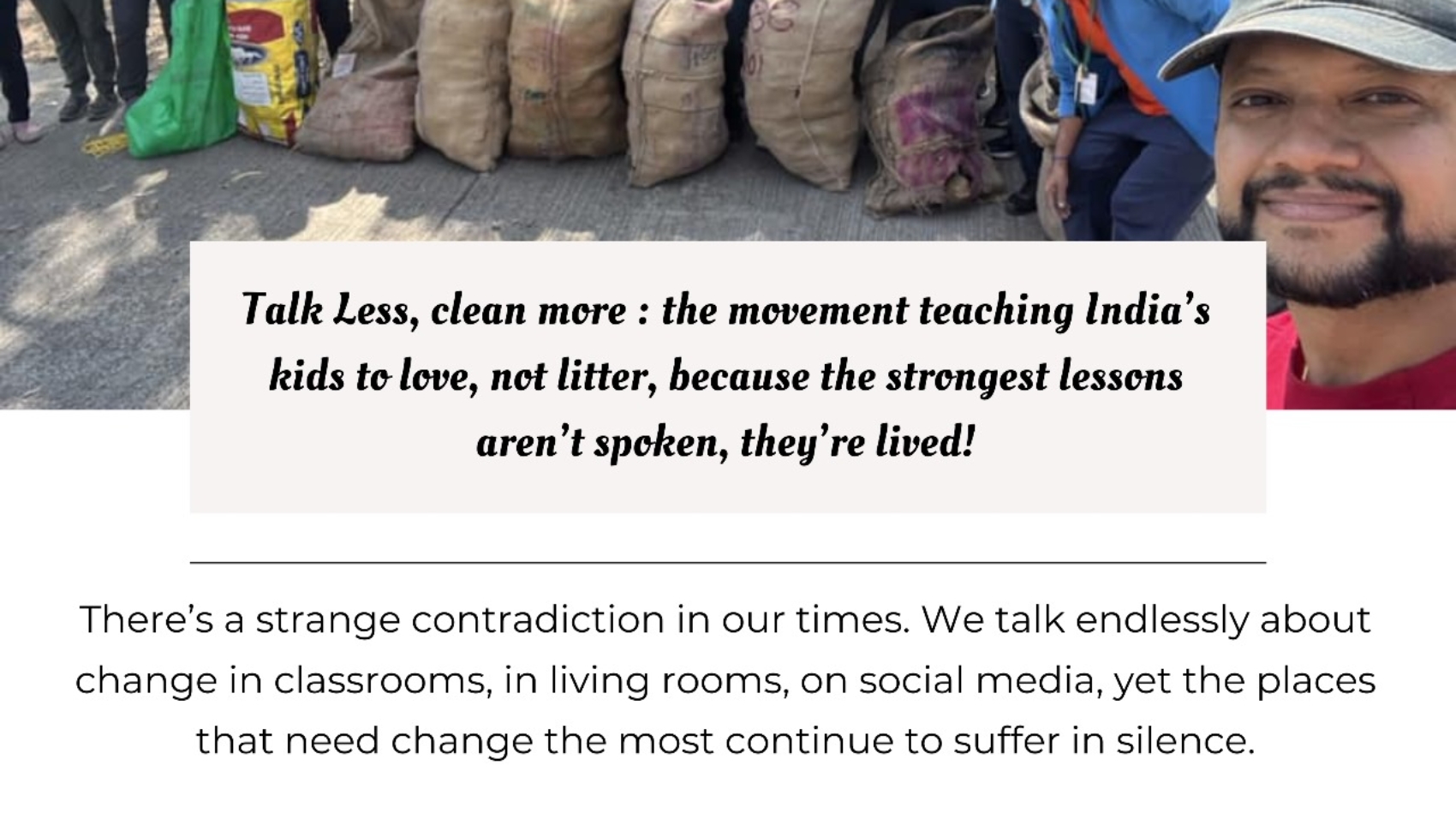
Talk Less, clean more : the movement teaching India’s kids to love, not litter, because the strongest lessons aren’t spoken, they’re lived.

There’s a strange contradiction in our times. We talk endlessly about change in classrooms, in living rooms, on social media, yet the places that need change the most continue to suffer in silence. Our forts, once symbols of bravery and empire, now stand burdened with plastic bottles, food wrappers, and indifference, and somewhere between all the talking, the simplest truth gets forgotten: real change begins when someone decides to pick something up instead of walking past it.

This is exactly where The Trash Talk begins, not as a loud campaign, but as a quiet, powerful shift in attitude. It isn’t built around speeches or slogans. It is built around action. Because if we want the next generation to respect our heritage, we must give them something far stronger than words to follow. We must give them an example.

When a group of schoolchildren goes on a fort cleanup drive. They might start the trek excited about the climb, the view, and the history. But along the trail, excitement pauses as they see plastic jutting out from the soil, bottles thrown into crevices, and wrappers fluttering against stones older than their great-grandparents. What begins as shock slowly turns into awareness. And then, into responsibility. The moment a child bends down to lift that first piece of trash, something changes inside them. A lesson begins that no textbook has ever managed to teach.

Cleaning a fort doesn’t just remove waste. It creates a connection. It transforms a monument from a “tourist spot” into something personal. The child who cleaned it will not litter again. The teenager who carried a sack of plastic down a hill will think differently about waste. The young volunteer who sees a fort restored to dignity will grow up valuing heritage in a way no lecture ever could.

This is the true motive of The Trash Talk. It is not about criticizing people for littering; it is about building people who simply choose not to. It is about raising a generation that understands love for nature and heritage not as a rule, but as a natural instinct.

The forts of Maharashtra have weathered storms, battles, and centuries. Yet today, their greatest threat is not warfare but waste. Restoring them isn’t just an act of cleanliness — it is an act of gratitude. It honours the history written into every stone and the sacrifices that built them. And when children and young adults take part in this restoration, they don’t just clean, they inherit pride, identity, and belonging.

What makes this movement truly special is how deeply it shapes character. A child who climbs a fort to clean it learns discipline. A young adult who collects trash learns humility. A volunteer who returns month after month learns commitment. These are values that travel far beyond the mountain trails and into every aspect of life.

In a world overflowing with discussions about climate change, sustainability, and heritage preservation, The Trash Talk chooses a quieter but far more powerful path. It chooses action over argument. It chooses example over instruction. And it offers the next generation something profound, not just a cleaner fort, but a cleaner mindset.

If we want our children to care, they must see us care. If we want them to respect heritage, they must watch us respect it. And if we want them to choose responsibility, they must witness us choosing it first.

So the next time you walk up to a fort, carry more than enthusiasm. Carry intention. Carry a bag. Carry the belief that history deserves dignity. Talk less. Clean more. Love deeply. Litter never.

B - 1

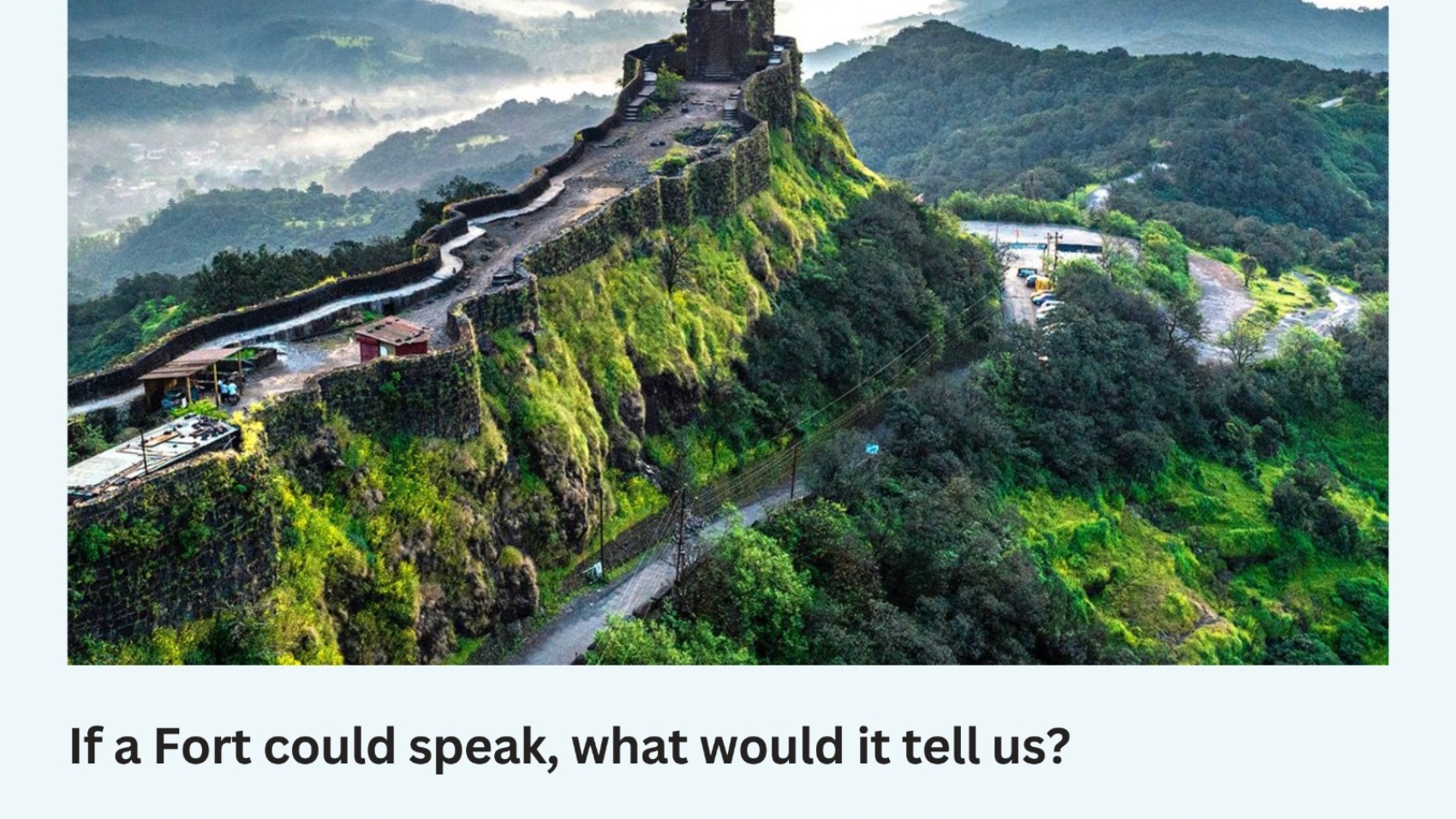
If a Fort could speak, what would it tell us?

Stand still on a fort long enough, and something begins to happen. The wind softens around your ears. The stones beneath your feet feel warmer. The sky stretches wider, as if ready to share a memory. And in that moment, when there’s no noise except your breath, you begin to wonder : if this fort could speak, what would it tell us?

Perhaps it would begin with pride. It would remind us that long before we arrived here with backpacks and camera phones, others climbed the same slopes with armour clinking against their ribs and fear sitting heavy on their lungs. The fort would remember days when horses paced the courtyard, when the night sky flickered with torches instead of city lights, and when every stone was laid with intent not for beauty, but for protection.

“I remember who you were,” the fort might say. It would not mean royalty or kings, but the ordinary men and women who built, defended, and believed. A fort has held the footsteps of messengers who ran barefoot, mothers who hid tears behind pride, and young soldiers who whispered promises into the night sky. It carries their stories in silence. History books cannot capture what stone can.

And then, perhaps, its voice would change. Not angry only weary. A quiet disappointment that is easier to feel than to hear. “I did not survive storms, sieges, fires, and centuries only to be buried under plastic,” it might say. Once, people came here to protect something bigger than themselves. Today, many come to prove they were here a photo at the top, a wrapper left behind. The fort has always faced invaders, but this new invasion is made of apathy and packaged in single-use plastic.

Yet, even through that sadness, a fort would find hope. It sees volunteers climb its steps with garbage bags instead of picnic baskets. It watches teenagers sweat under the sun, collecting trash they did not create, turning shame into responsibility. It sees the work of people like Kedar Patankar and The Trash Talk, who return month after month with new hands, new hearts, and the same belief that heritage deserves more than admiration; it deserves effort.

For the fort, every bottle lifted is a victory. Every piece of trash carried down is a memory restored. When someone bends down to clean what others ignored, the fort remembers the courage it once witnessed. Cleaning a fort doesn’t just change the fort it changes the person. It is impossible to walk away from a cleanup and see history the same way again. Something settles into you: a pride that is quieter than applause, but deeper than any slogan.

If a fort could speak, it might offer one final reminder before you walk down. It would say that heritage is not an object; it is an inheritance. You don’t visit a fort you inherit it. You don’t look at it you learn from it. And when you leave, you carry a small part of that story forward, whether you realize it or not.

On the descent, when the world returns to noise and notifications, the memory of the fort’s silence stays with you. You understand that history is not a chapter to be memorized it is a conversation between who we were and who we are becoming. And somewhere in that dialogue lies a simple truth:

If a fort could speak, it wouldn’t ask to be admired. It would ask to be protected.