Updated Blog 1

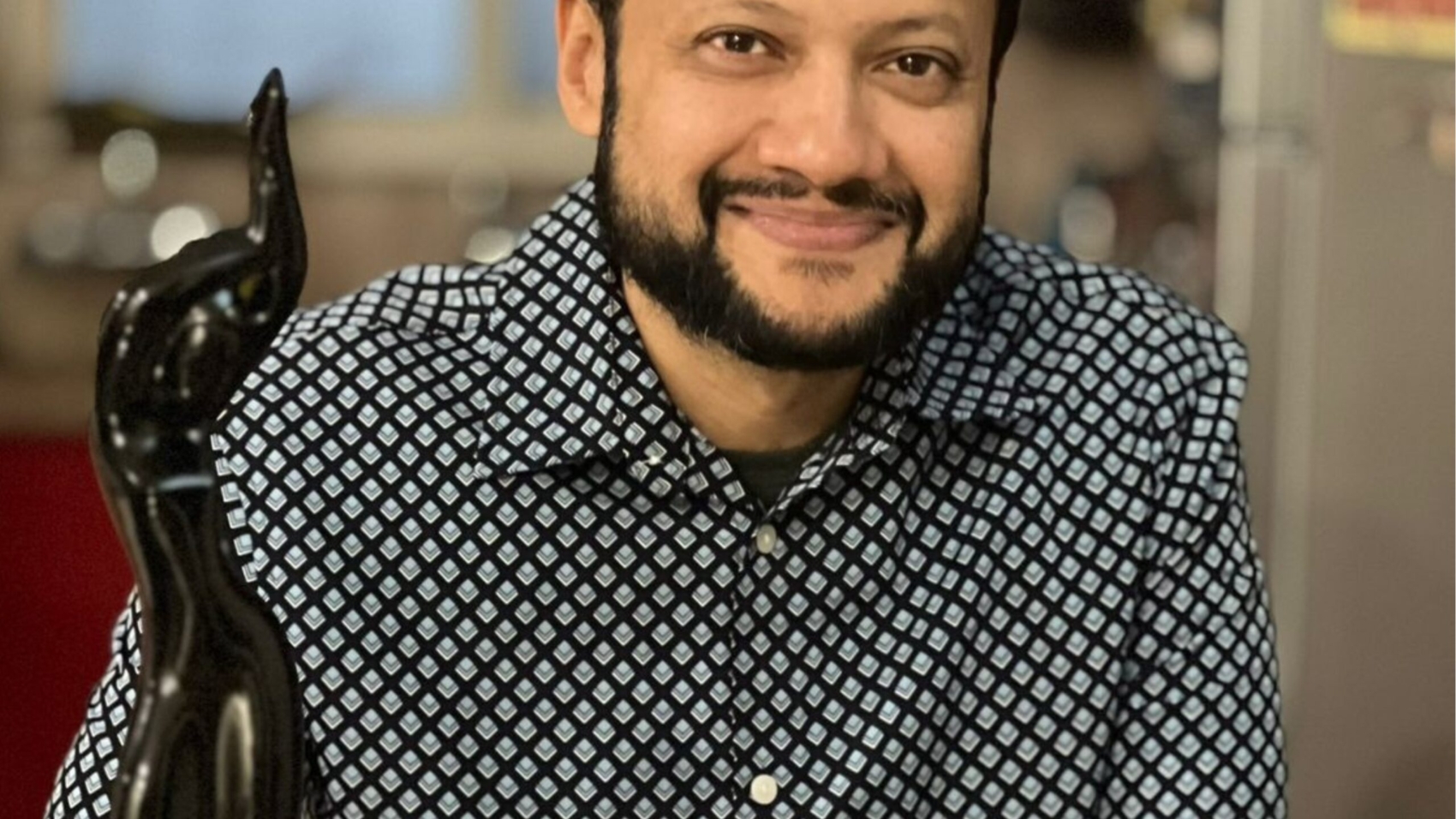
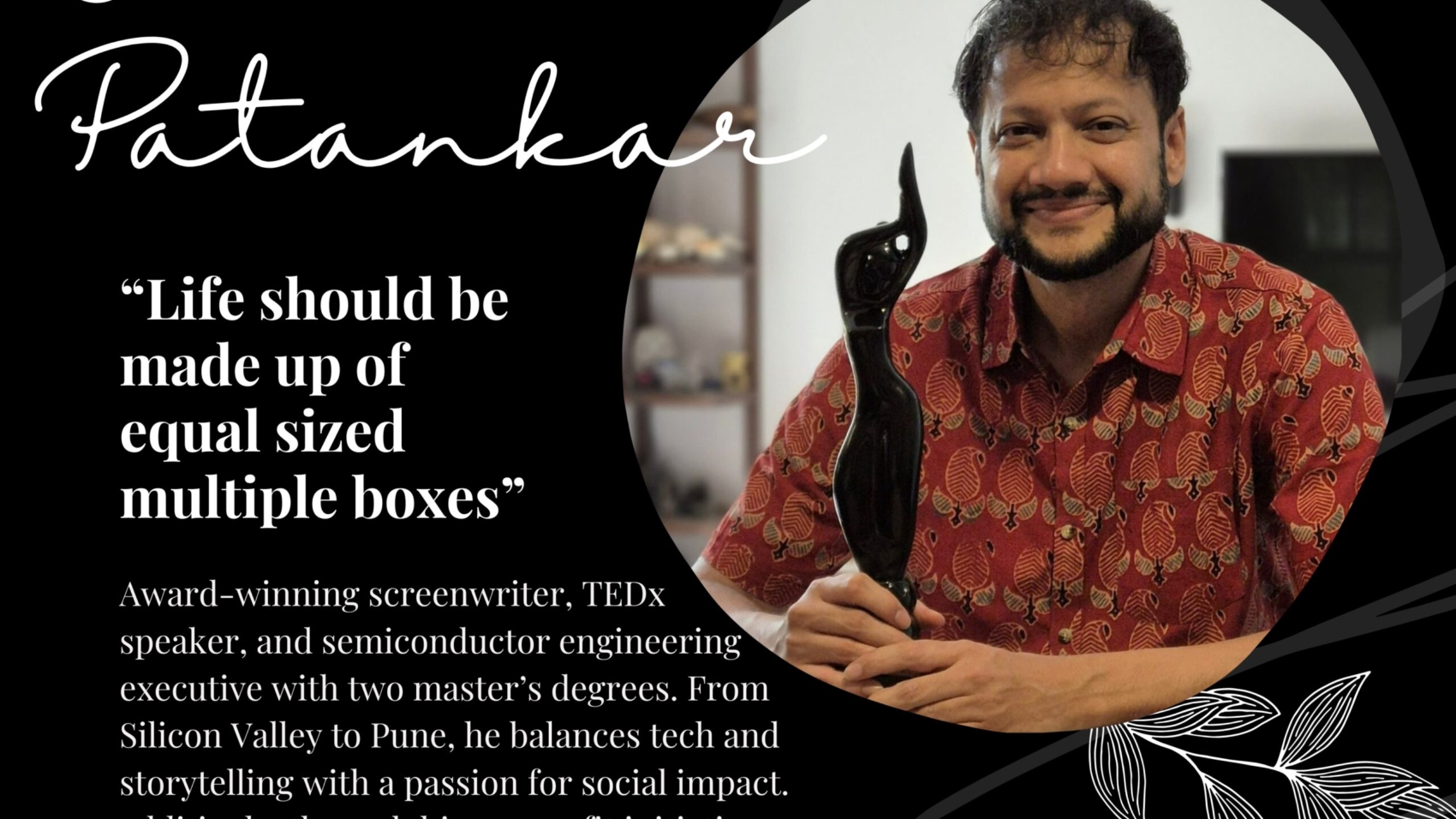
Kedar Patankar: The Man Who Refuses to Be Just One Thing!

Semiconductor Engineering Executive. Screenwriter. Fort Cleaner. Teacher. Dreamer.

In a world obsessed with labels and LinkedIn bios, Kedar Patankar is a refreshing contradiction — a man who believes you don’t have to choose just one path. And if his life is any indication, he’s absolutely right.

Kedar’s journey began like many others: an exceptional student with a mind for technology. He went on to earn two Master’s degrees from a prestigious university in the U.S. and carved out a successful career in the high-tech industry of semiconductors. For over 20 years, he thrived in Silicon Valley and Minneapolis, working on microchips and innovations that power the modern world.

But even as he climbed the tech ladder, something else stirred within him — stories. Characters, dialogues, and scenes played out in his mind. What started as a creative outlet became a second calling. Soon, Kedar was writing full-length movie scripts and web series. His work caught the eye of the industry and audiences alike, earning him accolades — including a Filmfare Award — for his ability to turn raw human experiences into unforgettable cinema.

Yet, the spotlight never blinded him.

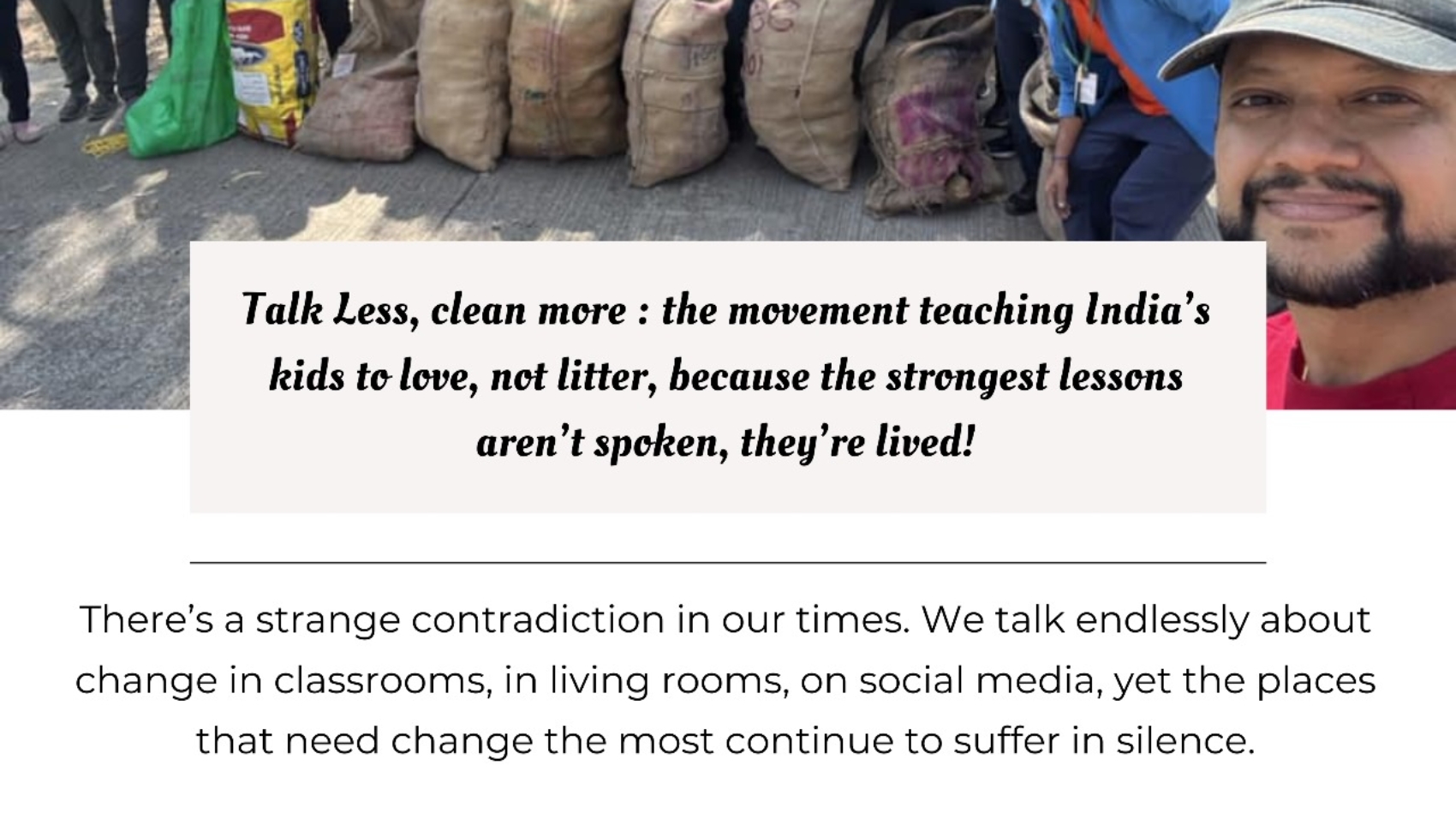
After returning to Pune with his family, Kedar began what he calls his “passion project”: a no-profit volunteer initiative named The Trash Talk. Each month, he gathers a team of everyday heroes to clean plastic trash from India’s ancient forts. To him, it’s about more than cleaning — it’s reclaiming history and inspiring civic pride.

And as if scriptwriting, engineering, and environmental activism weren’t enough, Kedar also makes time each month to visit a remote village — not for a shoot, but to teach spoken English to children. It’s his quiet rebellion against inequality, one word at a time.

A powerful TEDx speaker and a humble changemaker, Kedar’s life defies the typical arc. He often says, “Everyone can do everything.” It’s not a tagline — it’s a philosophy.

And as we sit with him in a quiet café in Pune, he sips his chai, shrugs, and adds:
“Life should be made up of equal sized multiple boxes”

B - 3

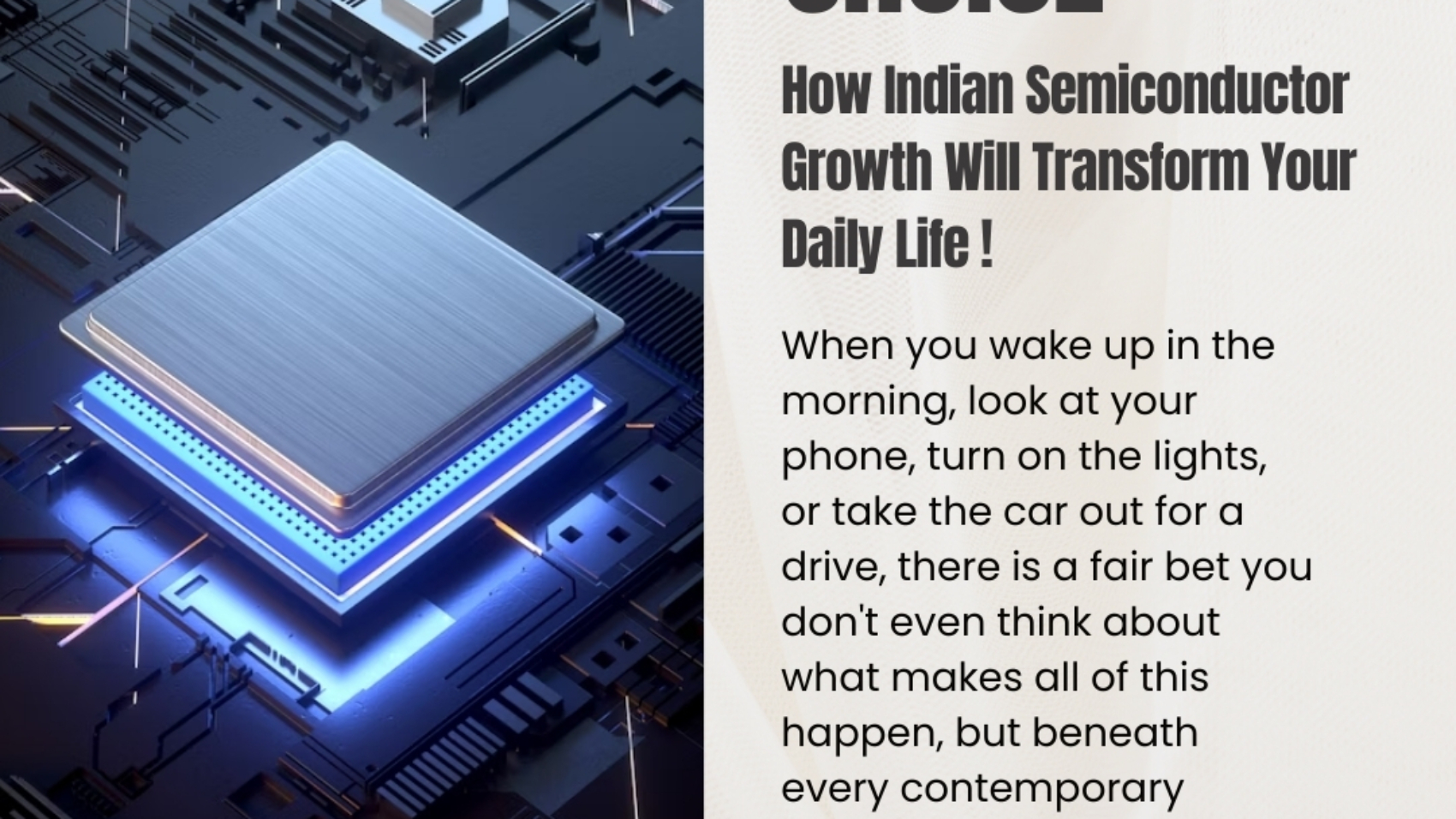
From Chips to Choices : How Indian Semiconductor Growth Will Transform Your Daily Life!

When you wake up in the morning, look at your phone, turn on the lights, or take the car out for a drive, there is a fair bet you don’t even think about what makes all of this happen, but beneath every contemporary gadget and intelligent solution is a tiny, high-powered slice of technology “the Semiconductor-Chip”.

India has long been a software powerhouse for decades. But now, it’s boldly going into the semiconductor arena, those small silicon brains that energize everything from your smartphone to high-end medical equipment. And this move isn’t solely about commerce or national ego. It’s about revolutionizing the way every Indian works, lives, and interacts with tech.

Why Semiconductors matter more than ever?

Semiconductors are the unsung heroes of the digital world. They are hidden in devices we use every day:

The phone in your pocket

The electric car you drive

The medical equipment saving lives in hospitals

The communication networks connecting us all

But here’s the catch: India has depended to a large extent on imported semiconductors from Taiwan, South Korea, and the U.S. That exposed us to global supply chain outages and increasing costs. The COVID-19 pandemic came as a rude wake-up call when the world struggled to get enough chips for basic products.

That is why the Indian government’s aggressive drive to develop a local semiconductor ecosystem is a game-changer. With policies encouraging chip design, manufacturing, and innovation, India is well on its way to moving away from being a consumer of technology to becoming a powerhouse producer.

What this means for your daily life?

More Affordable Devices
As manufacturing at home is ramped up, prices of devices such as smartphones, laptops, and smart home appliances will come down in the long run. That is better technology in your pocket at affordable prices.

Faster, Smarter Solutions
India’s semiconductor development is not merely about producing more chips; it’s about producing improved chips — chips built with India’s specific needs in mind. Consider wiser energy meters, sophisticated health-tracking wearables, and more effective industrial automation aiding businesses small and large.

Job Creation & Innovation
The semiconductor boom is already generating tens of thousands of high-skilled employment opportunities. Innovators, designers, and engineers are creating homegrown technology solutions that allow India to compete with the world and inspire young minds to think big.

Better Digital Infrastructure
Quicker internet, enhanced mobile connectivity (say hello, 5G!), and reliable cloud solutions depend on high-end chips. This translates into a better experience in online education, telemedicine, and digital government services, particularly in rural India.

Sustainable Technologies
As India drives towards electric mobility and renewable energy, effective semiconductor solutions will assist in constructing cleaner, smarter energy grids and green electric vehicles.

People Behind the Progress

Industry leaders like Kedar Patankar are at the forefront of this revolution. With over two decades of semiconductor engineering experience in Silicon Valley and Minneapolis, Kedar now helps lead startups in India that develop innovative semiconductor solutions. His work is a powerful example of how expertise is being redirected to serve India’s growth, creating technologies that not only power devices but power lives.

A Future You’ll Feel Every Day

The semiconductor business is not just about factories or boardrooms anymore. It’s a matter of making decisions

The decision to purchase affordable, quality technology.

The decision to receive better healthcare through advanced devices.

The decision to live responsibly with smarter energy solutions.

Over the next few years, as India’s semiconductor industry expands, you won’t just hear news headlines about “chip wars” or “supply chains.”
You’ll experience it in your pocket, your home, and your workplace.

Because at the end of it all, semiconductors are not merely about technology, they’re about making every Indian live smarter, easier, and more connected.

Blog 1

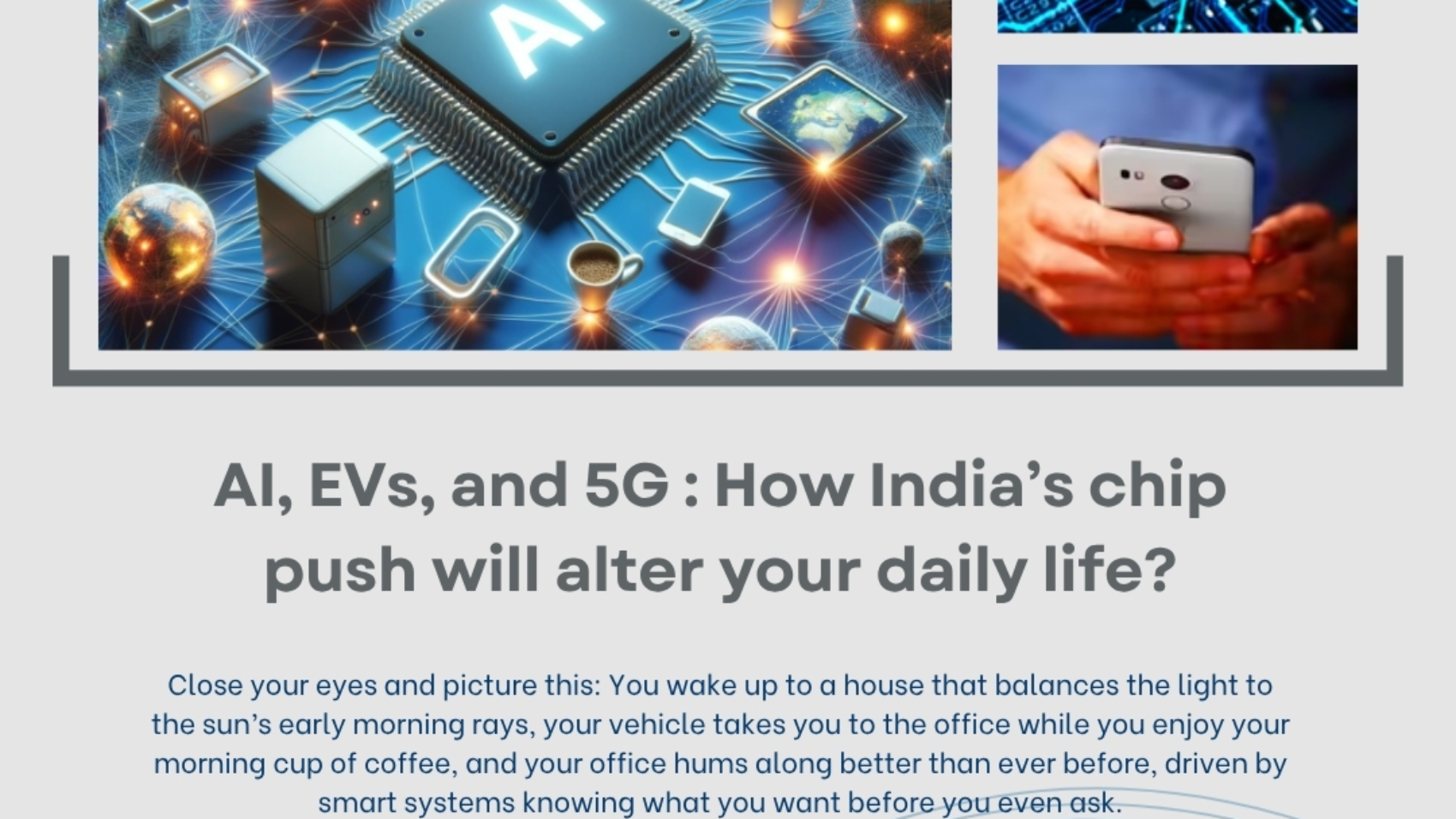
AI, EVs, and 5G : How India’s chip push will alter your daily life?

Close your eyes and picture this: You wake up to a house that balances the light to the sun’s early morning rays, your vehicle takes you to the office while you enjoy your morning cup of coffee, and your office hums along better than ever before, driven by smart systems knowing what you want before you even ask.

This is not science fiction. This is the India of the future, constructed upon the smallest but most potent building block of technology, “the semiconductor chip.

The Chip That Runs the World

Semiconductors may not be seen, but they are ubiquitous in your phone, your laptop, your smartwatch, your automobile, your credit card, and even in your washing machine. They are the very center of today’s innovation.

India has been the globe’s software brain for decades, but not its hardware heart. That’s about to change, and rapidly so.

The Indian government’s ambitious Semicon India programme and enormous chipmaking incentives are going to make the nation a world semiconductor leader. And the effects won’t be limited to factories or boardrooms alone; they will reverberate through your lifestyle, remapping the way we live, work, and travel.

1. AI at Home: Smart Living, Smarter Chips

Your “smart” devices are only as smart as the chips inside them. As India ramps up chip design and production, we’ll see more accessible, locally made technology powering our homes.

Think about it, refrigerators that order groceries before they run out, fans that adjust speed with room temperature, and AI assistants that truly understand regional languages.

With local chip innovation, smart home appliances will be cheaper, more stable, and more tailored to Indian homes.

2. EVs on the Road: Chipping Away at the Revolution

Electric Vehicles (EVs) are not just about batteries; they’re about brains.
All EVs depend on semiconductors for everything from navigation and energy management to safety features and motor control.

India’s rapidly growing EV market is soon set to receive a massive boost from the semiconductor tsunami. With domestic chip production increasing, get ready for EVs that are smarter, more affordable, and more efficient, designed for Indian roads, climate, and people.

With faster chips comes faster innovation. Imagine self-parking vehicles, traffic-responsive routing, and cars that talk to city infrastructure. The motorways of the future will essentially speak back.

3. 5G and Beyond: Bridging a Country in Real Time

5G is the digital spine of today’s world, but a concept without chips. Semiconductors enable the super-fast, low-latency connections of 5G.

When India is deploying 5G in cities and towns, indigenous chips will power smoother connections, stronger signals, and real-time communication.

From telemedicine in far-flung villages to augmented education driven by AR/VR, semiconductors will compress distances and create opportunities.

And when 6G and satellite internet systems become available, India will already possess the chip infrastructure to drive the next digital shift.

4. Workspaces Redefined: From Silicon Valley to Silicon Bharat

Automation, artificial intelligence, and robotics are transforming the way we work, and all of them are based on chips.

With India investing heavily in semiconductor startups and R&D, we’re looking at an economy that won’t just consume technology but will create it.
From precision agriculture systems to AI-driven healthcare diagnostics, chip innovation will open new industries and job roles across the country.

The shift will be massive, empowering engineers, designers, and entrepreneurs to build products made in India, for the world.

The Bigger Picture: Empowering Every Indian

Industry leaders such as Kedar Patankar, a veteran semiconductor engineering executive with more than two decades of international experience, take the view that this revolution is not merely technological, it’s social.

By developing indigenous semiconductor engineers and innovation, India is building a future that is more inclusive, accessible, and affordable.
It’s not about chips, it’s about choices.
Choices that reshape the way we live, learn, and lead.

The Future Is Smaller and Smarter

In the years to come, each click, each drive, each call, and each connection will be conditioned by the success of India’s chip story.

The smallest chip will bring the greatest transformation, from homes to highways, from factories to families.

So next time your car starts itself or your house welcomes you with ideal lighting, just remember, it all started with a silicon chip, and a country daring enough to construct its own.
B - 2

Talk Less, clean more : the movement teaching India’s kids to love, not litter, because the strongest lessons aren’t spoken, they’re lived.

There’s a strange contradiction in our times. We talk endlessly about change in classrooms, in living rooms, on social media, yet the places that need change the most continue to suffer in silence. Our forts, once symbols of bravery and empire, now stand burdened with plastic bottles, food wrappers, and indifference, and somewhere between all the talking, the simplest truth gets forgotten: real change begins when someone decides to pick something up instead of walking past it.

This is exactly where The Trash Talk begins, not as a loud campaign, but as a quiet, powerful shift in attitude. It isn’t built around speeches or slogans. It is built around action. Because if we want the next generation to respect our heritage, we must give them something far stronger than words to follow. We must give them an example.

When a group of schoolchildren goes on a fort cleanup drive. They might start the trek excited about the climb, the view, and the history. But along the trail, excitement pauses as they see plastic jutting out from the soil, bottles thrown into crevices, and wrappers fluttering against stones older than their great-grandparents. What begins as shock slowly turns into awareness. And then, into responsibility. The moment a child bends down to lift that first piece of trash, something changes inside them. A lesson begins that no textbook has ever managed to teach.

Cleaning a fort doesn’t just remove waste. It creates a connection. It transforms a monument from a “tourist spot” into something personal. The child who cleaned it will not litter again. The teenager who carried a sack of plastic down a hill will think differently about waste. The young volunteer who sees a fort restored to dignity will grow up valuing heritage in a way no lecture ever could.

This is the true motive of The Trash Talk. It is not about criticizing people for littering; it is about building people who simply choose not to. It is about raising a generation that understands love for nature and heritage not as a rule, but as a natural instinct.

The forts of Maharashtra have weathered storms, battles, and centuries. Yet today, their greatest threat is not warfare but waste. Restoring them isn’t just an act of cleanliness — it is an act of gratitude. It honours the history written into every stone and the sacrifices that built them. And when children and young adults take part in this restoration, they don’t just clean, they inherit pride, identity, and belonging.

What makes this movement truly special is how deeply it shapes character. A child who climbs a fort to clean it learns discipline. A young adult who collects trash learns humility. A volunteer who returns month after month learns commitment. These are values that travel far beyond the mountain trails and into every aspect of life.

In a world overflowing with discussions about climate change, sustainability, and heritage preservation, The Trash Talk chooses a quieter but far more powerful path. It chooses action over argument. It chooses example over instruction. And it offers the next generation something profound, not just a cleaner fort, but a cleaner mindset.

If we want our children to care, they must see us care. If we want them to respect heritage, they must watch us respect it. And if we want them to choose responsibility, they must witness us choosing it first.

So the next time you walk up to a fort, carry more than enthusiasm. Carry intention. Carry a bag. Carry the belief that history deserves dignity. Talk less. Clean more. Love deeply. Litter never.

B - 1

If a Fort could speak, what would it tell us?

Stand still on a fort long enough, and something begins to happen. The wind softens around your ears. The stones beneath your feet feel warmer. The sky stretches wider, as if ready to share a memory. And in that moment, when there’s no noise except your breath, you begin to wonder : if this fort could speak, what would it tell us?

Perhaps it would begin with pride. It would remind us that long before we arrived here with backpacks and camera phones, others climbed the same slopes with armour clinking against their ribs and fear sitting heavy on their lungs. The fort would remember days when horses paced the courtyard, when the night sky flickered with torches instead of city lights, and when every stone was laid with intent not for beauty, but for protection.

“I remember who you were,” the fort might say. It would not mean royalty or kings, but the ordinary men and women who built, defended, and believed. A fort has held the footsteps of messengers who ran barefoot, mothers who hid tears behind pride, and young soldiers who whispered promises into the night sky. It carries their stories in silence. History books cannot capture what stone can.

And then, perhaps, its voice would change. Not angry only weary. A quiet disappointment that is easier to feel than to hear. “I did not survive storms, sieges, fires, and centuries only to be buried under plastic,” it might say. Once, people came here to protect something bigger than themselves. Today, many come to prove they were here a photo at the top, a wrapper left behind. The fort has always faced invaders, but this new invasion is made of apathy and packaged in single-use plastic.

Yet, even through that sadness, a fort would find hope. It sees volunteers climb its steps with garbage bags instead of picnic baskets. It watches teenagers sweat under the sun, collecting trash they did not create, turning shame into responsibility. It sees the work of people like Kedar Patankar and The Trash Talk, who return month after month with new hands, new hearts, and the same belief that heritage deserves more than admiration; it deserves effort.

For the fort, every bottle lifted is a victory. Every piece of trash carried down is a memory restored. When someone bends down to clean what others ignored, the fort remembers the courage it once witnessed. Cleaning a fort doesn’t just change the fort it changes the person. It is impossible to walk away from a cleanup and see history the same way again. Something settles into you: a pride that is quieter than applause, but deeper than any slogan.

If a fort could speak, it might offer one final reminder before you walk down. It would say that heritage is not an object; it is an inheritance. You don’t visit a fort you inherit it. You don’t look at it you learn from it. And when you leave, you carry a small part of that story forward, whether you realize it or not.

On the descent, when the world returns to noise and notifications, the memory of the fort’s silence stays with you. You understand that history is not a chapter to be memorized it is a conversation between who we were and who we are becoming. And somewhere in that dialogue lies a simple truth:

If a fort could speak, it wouldn’t ask to be admired. It would ask to be protected.

22222

The Many Lives of Kedar Patankar: From Silicon Valley to Storytelling, and Saving Forts in Between!

In a world that constantly tells us to “stick to one thing,” Kedar Patankar is proof that a single life can hold multitudes. Semiconductor Engineering Executive. Screenwriter. Social changemaker. Fort cleaner. Educator. TEDx speaker. Kedar doesn’t fit neatly into any one box — and he doesn’t want to.

Raised in India, Kedar went on to earn two Master’s degrees from a top university in the United States. He spent over two decades working in the high-tech world of semiconductors in Minneapolis and Silicon Valley. From engineering complex chips to managing high-stakes tech teams, he thrived in the corporate world. But deep down, another world was quietly unfolding — a world of characters, dialogue, and stories itching to be told.

A Scripted Turn in Life

What started as a creative escape turned into a celebrated career. Kedar began writing movie scripts and web series — not just any scripts, but ones that won hearts and awards, including the prestigious Filmfare Award. His stories reflect life in all its messy, emotional brilliance — possibly because he’s lived so many versions of it.

Passion With Purpose: Cleaning History

But Kedar’s story doesn’t end at “The End.” When he moved back to Pune, he saw a different kind of script that needed rewriting — one about our relationship with history and the environment. So he started The Trash Talk, a no-profit initiative where volunteers clean plastic waste from ancient forts. Every month, you’ll find Kedar — not behind a camera, but with gloves on, hauling trash and leading a community movement. For him, restoring heritage is as important as writing it.

Teaching Where It Matters Most

Not one to stop at just one cause, Kedar also travels monthly to a remote village to teach spoken English to children. His goal? To help them speak with confidence and dream with courage. It’s a quiet, consistent act of service — far from the limelight, yet full of impact.

His Motto: Everyone Can Do Everything

If you ask Kedar how he does it all, he’ll smile and say: “Everyone can do everything.” It’s more than a motto — it’s a way of life. He believes you don’t need to choose between tech and art, or career and community. You can — and should — do it all if it fuels your soul.

Whether he’s on a film set, speaking at TEDx, cleaning heritage sites, or empowering children with education, Kedar Patankar is writing a life script that’s bold, unconventional, and deeply inspiring.

And maybe, just maybe, his life is the best story he’s ever written.

Short Story: The Truth About MUSIC VIDEO

The insects and flies, then I feel the presence of the Almighty, who formed us in his own image, and the breath A wonderful serenity has taken possession of my entire soul, like these sweet mornings of spring which I enjoy with my whole heart. I am alone, and feel the charm of existence in this spot, so absorbed in the exquisite sense of mere tranquil existence, that I neglect my talents. I should be incapable of drawing a single stroke at the present moment; and yet I feel that I never was a greater artist than now. When, while the lovely valley teems with vapour around me, and the meridian sun strikes the upper surface of the impenetrable foliage of my trees, and but a few stray gleams steal into the inner sanctuary.

The Number ONE Reason You Should Listen To MUSIC

The insects and flies, then I feel the presence of the Almighty, who formed us in his own image, and the breath A wonderful serenity has taken possession of my entire soul, like these sweet mornings of spring which I enjoy with my whole heart. I am alone, and feel the charm of existence in this spot, so absorbed in the exquisite sense of mere tranquil existence, that I neglect my talents. I should be incapable of drawing a single stroke at the present moment; and yet I feel that I never was a greater artist than now. When, while the lovely valley teems with vapour around me, and the meridian sun strikes the upper surface of the impenetrable foliage of my trees, and but a few stray gleams steal into the inner sanctuary.

Use MUSIC To Make Someone Fall In Love With You

The insects and flies, then I feel the presence of the Almighty, who formed us in his own image, and the breath A wonderful serenity has taken possession of my entire soul, like these sweet mornings of spring which I enjoy with my whole heart. I am alone, and feel the charm of existence in this spot, so absorbed in the exquisite sense of mere tranquil existence, that I neglect my talents. I should be incapable of drawing a single stroke at the present moment; and yet I feel that I never was a greater artist than now. When, while the lovely valley teems with vapour around me, and the meridian sun strikes the upper surface of the impenetrable foliage of my trees, and but a few stray gleams steal into the inner sanctuary.